Curricula, built to be handed over
Image-first slides, lesson structure and teaching notes designed to work in low-bandwidth classrooms and be run by someone who did not write them.
Youth-led · Japan · Nonprofit
We build English curricula and hand them to the teachers and organisations already working with the students who need them.
01 What we do
Getting devices and connectivity to every student is the hardest part of remote teaching, and it is rarely the part we can solve. So we stopped trying to teach every student ourselves. We build the materials, and the people already in the room deliver them.
Image-first slides, lesson structure and teaching notes designed to work in low-bandwidth classrooms and be run by someone who did not write them.
Partner organisations and their teachers run the lessons. They know their students; we supply the structure and the materials.
What the teachers report back becomes the next version. The curriculum improves because it has been used, not because we rewrote it.
Who writes them
Our mentors are 13–18. The qualification they hold is not a school award — EIKEN Grade 1 is an adult certification, and most adults who sit it do not pass. Every person who writes or reviews a curriculum has cleared all three of the following.
Passed across reading, writing, listening and speaking. An adult-level certification with a pass rate in the low teens.
The alternative route where EIKEN Grade 1 has not been taken.
A one-on-one interview plus a taught demo, assessed on communication and teaching ability — not just on the certificate.
02 Where we work
How we work differs by partner, and we would rather be precise about it than round it up.
Where EN2U is based and where our mentors are. Every curriculum is written here.
A year of weekly lessons with an NPO partner — our mentors in the room, one hour per group, every week.
We provided the materials. Our partner delivered the teaching. We did not run these classrooms, and we amplify Gaza Soup Kitchen’s humanitarian work separately.
03 Impact
Figures below are what our records support. Where a number is a floor, it is written as a floor.
Guatemala
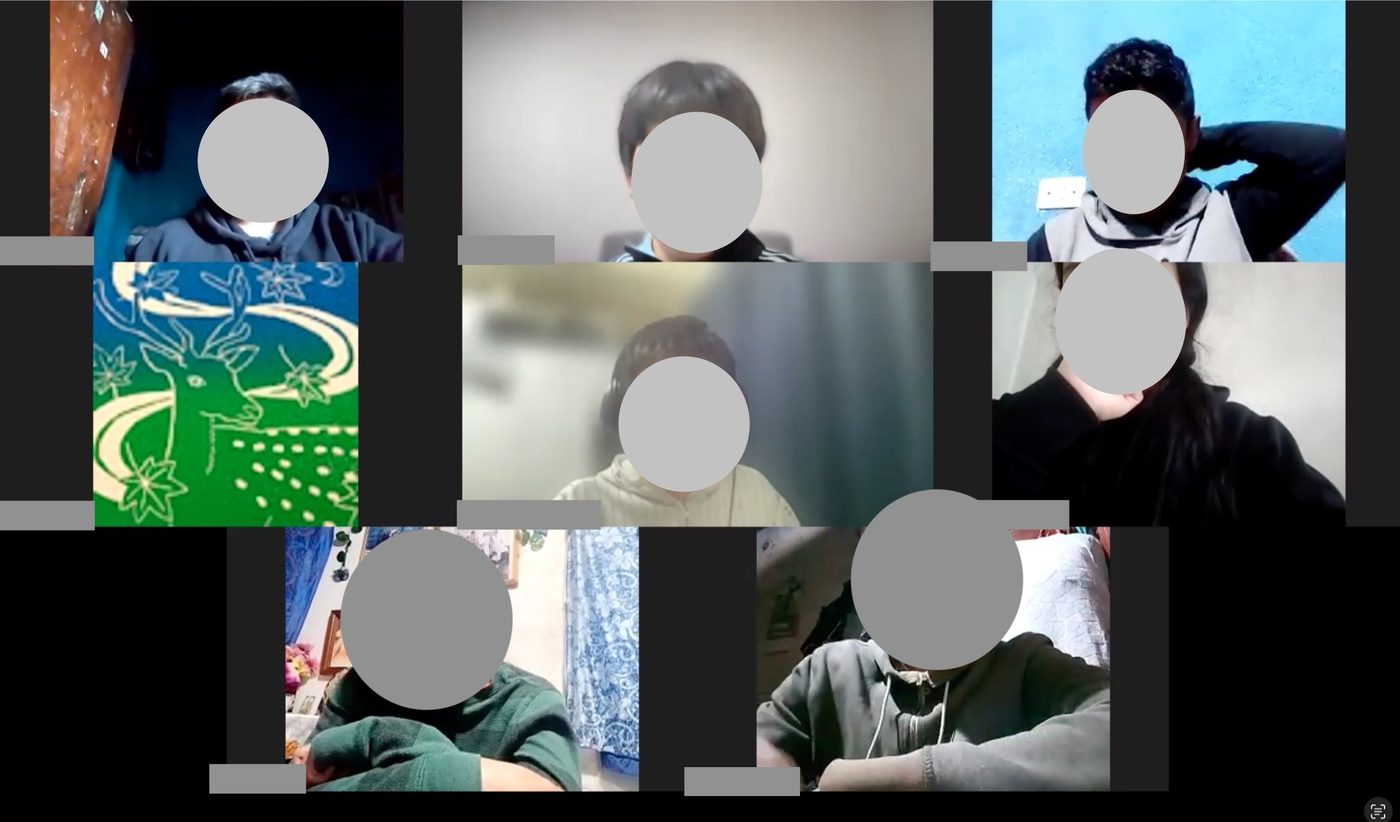
Working with an NPO partner, our mentors taught weekly for roughly a year — one hour per group, every week. We built image-first slides that worked over unreliable connections, opened with icebreakers to get students talking, and wrote feedback after each session.
This is the only programme where EN2U mentors were the ones teaching. Everything we learned about what survives a low-bandwidth classroom came from here, and it is what the curricula are built on.
Gaza
We provided teaching materials to a partner in Gaza. They ran the sessions. We were not in the room and we did not run these classrooms — the distinction matters, and we would rather state it than let a reader assume otherwise.
Separately from this, we use our platform to amplify Gaza Soup Kitchen, a grassroots organisation providing hot meals across Gaza. That is solidarity work, not a teaching programme, and we count it as neither.
Methodology
Hours are counted from scheduled sessions that ran. “Students reached” combines students our mentors taught directly with students taught by partners using our curricula — we do not separate the two because our partners report totals, not rosters. Where a figure is a floor rather than an exact count, it is written with a plus sign. We do not publish follower counts as impact.
04 Contact
We work with organisations that are already teaching. If that is you, or you want to use our curricula, reach out.